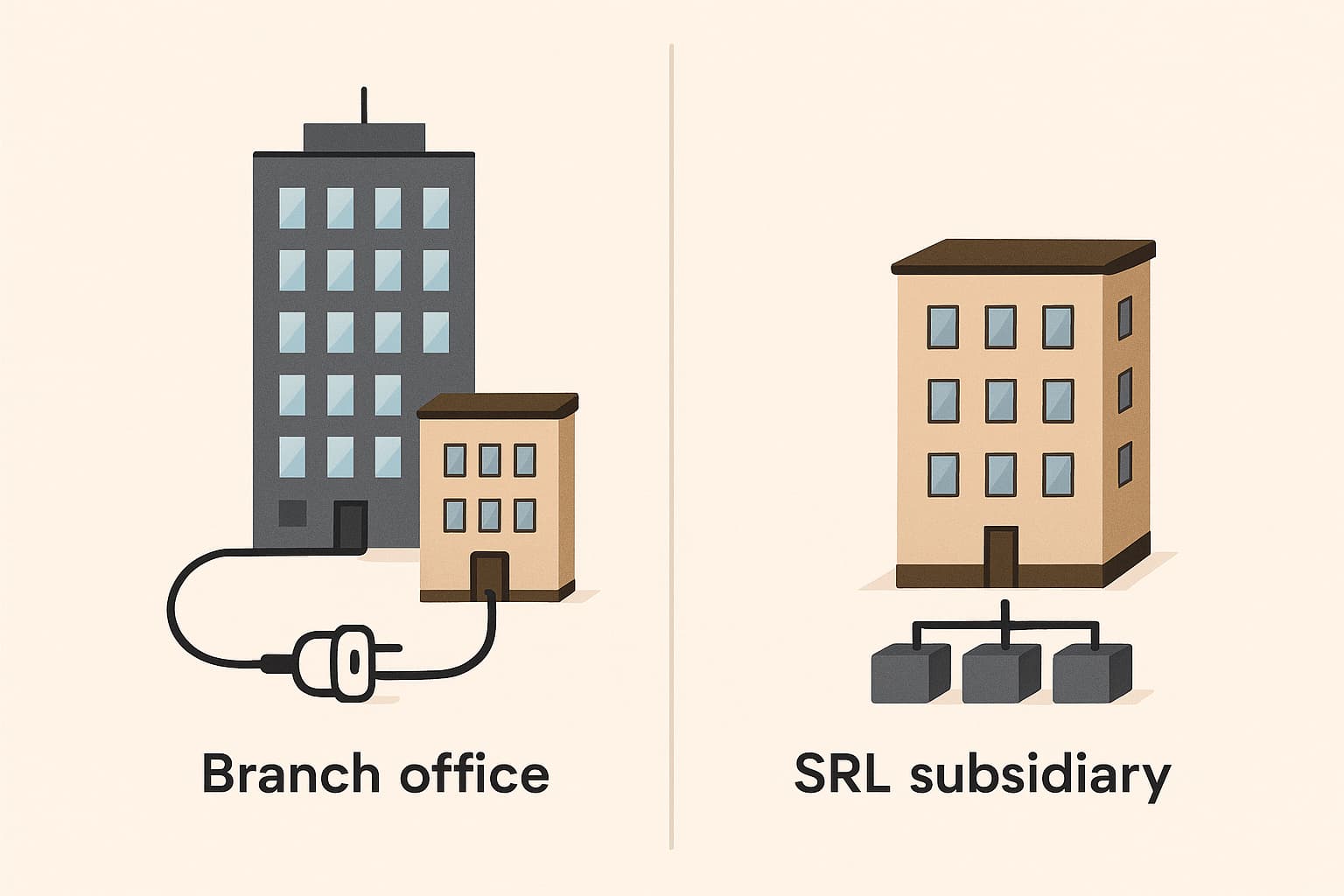
Open an SRL in Italy as a US Citizen: Costs, Timeline, Visas [2026 Guide]
Thinking about launching or relocating your business to Italy? The SRL (Società a Responsabilità Limitata) is Italy's go‑to limited liability company—roughly comparable to a US LLC—combining liability protection, flexible governance, and professional credibility with Italian banks, partners, and customers. This 2026 guide explains what to expect as a US citizen: requirements, step‑by‑step process, realistic costs, timelines, visa pathways, tax and compliance duties, and practical tips.
Plan your SRL with a specialist →
See our Company Formation Service →
Note: This guide is informational, not legal or tax advice. Rules change; work with an Italian notary, accountant, and immigration counsel.
Minimum Share Capital: €1 Is Legal-But Aim Higher
- The law allows forming a standard SRL with as little as €1 of share capital.
- If capital is below €10,000, you must allocate 20% of annual profits to a legal reserve until you reach €10,000.
- Capital under €10,000 must be fully paid in at incorporation; if capital is €10,000 or more, at least 25% can be paid in upfront.
- Best practice: choose at least €10,000. It enhances credibility with banks, suppliers, and clients, eases financing discussions, and avoids the tight reserve build-up obligation. For most serious ventures, undercapitalizing is a false economy.
For tax and cost implications of different capital choices, see: Taxes of an SRL: 2025 Guide.
What Is an Italian SRL
The SRL is Italy's most popular corporate form for SMEs and foreign founders because it balances protection and flexibility:
- Limited liability: shareholders are liable up to their contribution; personal assets are generally protected.
- Flexible governance: customized bylaws, tailored shareholder agreements, and the ability to appoint one or more directors (administrators).
- Adaptable to growth: adding shareholders, raising capital, and onboarding investors is straightforward.
- Suitable across industries: from consulting and tech to manufacturing and commerce.
There's also the simplified SRL (SRLS): it uses a standardized template, only allows individuals as shareholders, and accepts only cash contributions. It can reduce drafting options and flexibility-many international founders therefore prefer the traditional SRL. Learn about choosing the right structure in SRL vs Sole Proprietorship: Complete Comparison and our Company Formation Service.
Who Can Own and Manage
- Shareholders: at least one, individual or company, resident or non-resident.
- Directors: at least one. A non-resident director is allowed; some banks prefer an Italy-resident director for practical reasons.
- Tax Code (Codice Fiscale): required for all shareholders and directors. Your advisors can assist in obtaining it.
- Permanent Establishment (PE) caution: appointing a director and staff in Italy and maintaining a fixed place of business usually creates an Italian PE-a normal outcome for an SRL meant to operate in Italy. If your intent is only to sell into Italy from abroad without presence, review cross-border alternatives with your advisors and understand Italy tax residency rules.
Core Requirements
- Registered office (sede legale): a physical address in Italy; virtual registered offices are permitted for legal domicile and filings. If you conduct operations, verify zoning and any sector permits. See our Company Formation Service.
- PEC (certified email): mandatory for the company; it functions as official service of process and government communications. Setup is included in most formation packages: Open a company in Italy.
- Digital signature: needed to sign filings and e-invoicing. Non-residents can obtain a qualified digital signature from providers that support foreign IDs.
- Corporate bank account: usually opened after the company deed; some banks allow a provisional capital deposit before the notary meeting.
- Accounting and statutory books: keep corporate ledgers and file annual financial statements with the Companies Register.
- VAT: register when you start trading; more below. For support, visit Open VAT Number in Italy.
- Sector-specific permits: food, health, finance, transportation, and other regulated fields may require additional clearances.
Step-by-Step: Process and Timeline
Plan for an 8-12 week journey from decision to "fully operational" (faster if documents are ready, slower if you need visas or sector licenses). Typical path:
-
Scope, name, and ATECO code selection
Define the business model and choose the ATECO activity code. This code drives VAT treatment, Chamber classification, and sometimes licensing requirements. For broader context, see the pillar guide: How to Start a Business in Italy.
-
Draft bylaws and governance
Prepare the articles of association and shareholders' agreement (if needed for vesting, drag/tag, non-compete). Decide on share capital amount, director structure, and powers.
-
Documents, translations, and apostille
Collect IDs, tax codes, and KYC for all founders. If you plan to incorporate remotely, prepare a Power of Attorney (PoA) notarized in the US and apostilled under The Hague Convention; arrange sworn translations into Italian. Your formation partner can include PoA handling: Open a company in Italy.
-
Capital deposit arrangements
If you choose ≥€10,000, you can deposit as little as 25% initially; below €10,000 you must deposit 100%. Depending on the bank, you may deposit capital into a provisional account or a notary escrow.
-
Notary meeting (deed of incorporation)
The notary executes the deed, confirms the bylaws, verifies KYC and capital, and files for registration.
-
Registration and VAT
Registration with the Companies Register, VAT activation, and PEC setup follow. Plan VAT start with your go-live. Need help? Open VAT number in Italy.
-
Social security and payroll setup
Register as an employer with INPS/INAIL if you plan to hire. Directors' compensation can trigger social contributions depending on role and structure. Get ongoing support: Tax & Accounting for Expats.
-
Licenses and go-live
Activate e-invoicing, select an invoicing provider, and set up bookkeeping. Apply for any sector or municipal authorizations.
Want a personalized timeline? Book a free 15-min consultation.
Costs and First-Year Budget
Expect one-off incorporation costs plus annual operating costs. Ranges vary by city, notary, and complexity:
- Notary and public deed: €2,000-€3,500 - handled via our Company Formation Service
- Legal and tax advisory for setup: €1,500-€3,000 - see Tax & Accounting for Expats
- Chamber of Commerce fees: €200-€500
- Registration taxes and stamps: €150-€300
- Company books stamping and initial fees: ~€309
- PEC (certified email): €30-€50/year
- Translations and US apostille: €200-€500 (more if corporate docs)
- Registered office/domiciliation: €1,200-€2,000/year - via Open Company
- Power of Attorney (if used): €500-€1,500
- Bank account opening and fees: €50-€150
Working budget for year one, including capital and basic operations, often runs €15,000-€40,000. Heavier regulatory sectors, premium legal drafting, or larger premises raise costs; a lean consulting or software SRL tends toward the lower end if well organized.
Need numbers for your case? Request a tailored SRL formation quote.
Visas and Immigration Pathways
You can incorporate an SRL without a visa. But to manage operations on the ground, stay beyond 90 days, or work in Italy, you need a suitable residence permit. Common routes for US citizens:
- Short-stay business/tourist (visa-exempt up to 90 days): allows travel for meetings and setup steps; does not authorize daily operations.
- Self-employment visa (lavoro autonomo): suitable for entrepreneurs/freelancers, generally 1-2 years. Requires proof of sufficient income and a viable business plan. It is subject to annual "decreto flussi" quotas and several clearances; plan early.
- Startup visa: for innovative startups with a certified business plan and endorsements from an accredited incubator/committee. Faster in practice when "innovative" criteria are met, but narrower in scope.
- Investor visa: two-year permit (renewable) for qualifying investments (e.g., €250,000 in an innovative startup, €500,000 in an Italian company, €2 million in government bonds, or a €1 million philanthropic donation).
Not sure which route fits? Talk to us and we'll map next steps to your timeline.
Taxes and Ongoing Compliance
Once your SRL is live, you'll manage several recurring obligations. Your accountant will guide filings and deadlines.
- Corporate income tax (IRES): 24% on taxable profits.
- Regional tax on productive activities (IRAP): standard 3.9% (regional variations).
- VAT: standard 22% (reduced rates for specific goods/services). Register and collect VAT once trading; file periodic returns and an annual return.
- Withholding taxes: apply to payroll and certain services; manage via F24 payments.
- Payroll and social security: register with INPS/INAIL and run monthly payroll if you employ staff. Director compensation can also trigger social contributions depending on structure.
- Financial statements and filing: prepare annual accounts, approve them in a shareholders' meeting, and file with the Companies Register within deadlines.
- Audit: required only if you exceed thresholds (assets, revenues, or number of employees) or if bylaws/investors require it.
- E-invoicing and digital books: Italy mandates electronic invoicing domestically; cross-border reporting obligations also apply. For hands-on help, see Tax & Accounting for Expats.
- Beneficial ownership register: report Ultimate Beneficial Owners as required; keep information updated.
- Local/municipal obligations: verify trade-specific filings, signage, waste disposal fees, and municipal taxes if you have premises.
- Data protection: if you process personal data, comply with GDPR (privacy notices, DPO where needed, processor agreements).
- Transfer pricing: if you transact with US affiliates or related parties, prepare TP documentation.
For more on taxation and residency interplay, read: Italy Tax Residency: Complete Guide and Taxes of an SRL: 2025 Guide.
Set up VAT and e-invoicing correctly: Open VAT Number in Italy - and consider ongoing Tax & Accounting for Expats.
Banking, Payments, and Practicalities
- Account opening: expect robust KYC/AML reviews. Many banks prefer in-person onboarding; some allow PoA or notary-escrow capital deposits, with full onboarding later.
- Resident director: not a legal requirement but can simplify banking and utilities. Some banks are more comfortable when at least one director or signatory is resident in Italy.
- Fintech options: payment processors and EU fintechs can bridge early-stage acceptance. Verify whether your industry and volume fit risk profiles.
- Currency: you can operate in EUR and invoice in foreign currency when appropriate; confirm VAT rules and exchange-rate handling in your accounting.
- Merchant acceptance: set up POS or online gateways early if you sell to consumers; Italian processors expect clear documentation of activity and chargeback policies.
If banking obstacles slow you down, coordinate sequencing with us via Contact.
Documents and Preparation Checklist (US Founders)
- Passport for all shareholders/directors; clear scans.
- Italian tax code (Codice Fiscale) for each shareholder and director.
- Proof of address for KYC (utility bill or bank statement).
- Power of Attorney if incorporating remotely: US-notarized, apostilled, and sworn translated into Italian. See Open a company in Italy.
- Corporate shareholder documents (if any): certificate of good standing, articles, incumbency-apostilled and translated.
- Board/shareholder resolutions: authorizing the investment and appointing Italian representatives.
- Source of funds: bank statements/letters for AML compliance.
- Business plan and ATECO selection: brief, practical, and aligned with licenses. Context: Start a Business in Italy (Pillar).
- Registered office contract: domiciliation agreement or lease - Open Company Service.
- Digital signature and PEC setup details.
- Banking dossiers: pre-filled forms to accelerate account opening.
- Immigration documents: if pursuing a visa, prepare financial evidence, plan, and supporting letters early.
- Sector permits: drafts of required applications (food handling, e-commerce notices, municipal filings, etc.).
Practical Tips to Save Time and Cost
- Capital credibility: while €1 is legal, counterparties evaluate substance. Choose capital that reflects your plans; €10,000 is a sensible minimum for most.
- Don't rush ATECO: the wrong code can complicate VAT and licensing. Use the pillar guide to frame options, then confirm with your accountant.
- Translations/apostilles early: US notarization + apostille + sworn translation is a common bottleneck for remote setups. We handle PoA within formation.
- Pick a responsive notary/accountant: working with teams used to foreign founders cuts weeks off.
- E-invoicing from day one: choose a provider integrated with your accounting; test a sample before go-live. Get help via Tax & Accounting for Expats.
- Payroll readiness: if you plan to hire, start employer registrations and draft contracts in parallel with incorporation.
- Immigration timing: align visa calendars with go-live if you need a work-authorized stay. Contact us to coordinate sequencing.
- Reserve building: if capital < €10,000, remember the 20% profit allocation until you reach €10,000.
- Bilingual contracts: include EN/IT versions for key suppliers and clients to avoid misunderstandings.
- Year-one budget: aside from setup, include accounting fees, PEC, domiciliation, insurance, and modest legal spend for contract templates.
FAQs
Can I incorporate without coming to Italy?
Yes. Most steps can be completed by Power of Attorney with US notarization, apostille, and sworn translations. Banks may still ask for an in-person meeting later. Learn more in our Company Formation Service.
Do I need an Italian partner?
No. A single US shareholder can own 100% of an SRL. A local advisor or resident director can ease operations and banking but isn't legally required. Explore Open Company in Italy.
How long does it take?
If documents are ready and no visa is needed, plan on 8-12 weeks to be fully operational. Add time for visas or sector licenses. If you want a tailored plan, contact us.
What about taxes?
The SRL pays IRES (24%) and IRAP (~3.9%). You'll manage VAT, payroll, and annual accounts. Coordinate with a US CPA for treaty and foreign tax credit planning. See Taxes of an SRL: 2025 Guide.
Can I start with a sole proprietorship (Partita IVA) instead?
You can, but it has unlimited liability and different tax/social contribution rules. The SRL offers liability protection and is typically better for hiring, outside investors, or higher-risk sectors. Compare options in SRL vs Sole Proprietorship.
Can I invoice in USD?
Yes, but confirm VAT compliance, exchange-rate handling, and accounting treatment with your accountant. Many Italian customers expect EUR invoices.
Do I need a physical office?
A registered address is mandatory. Whether you need operational premises depends on your business and licensing. See Open Company in Italy.
Is e-invoicing mandatory?
Domestic transactions require e-invoicing; cross-border reporting obligations also apply. Set this up with Tax & Accounting for Expats.
Ready to move forward?

![Open an SRL in Italy as a US Citizen: Costs, Timeline, Visas [2026 Guide]](/_next/image?url=%2Fimages%2Farticles%2Fopen-srl-italy-us-citizen-2025-guide.webp&w=3840&q=75)
 Giovanni Emmi|February 10, 2026