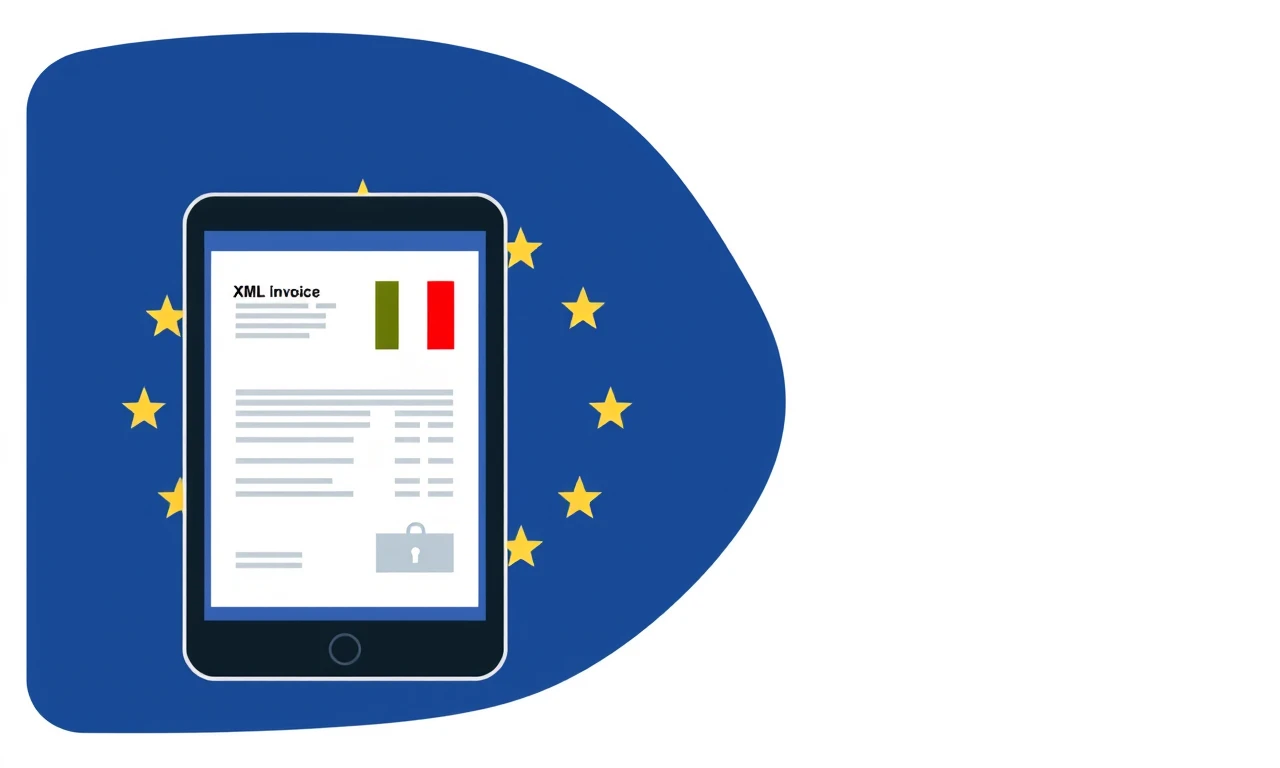
Imagine living in Italy, working as a freelancer or consultant for clients worldwide, and paying only 5% tax on your income. Does it sound like a dream? It's actually a reality, thanks to the Regime Forfettario, Italy's answer to the flat-tax system.
This incredibly advantageous tax scheme is designed to attract talent and simplify life for those starting a small business. For a foreign entrepreneur or professional earning €50,000-€85,000 annually, the flat-tax regime can save you €15,000-€25,000 per year compared to ordinary Italian taxation—making it the most beneficial gateway to the Italian market for solo entrepreneurs and freelancers.
But how does it work exactly? What are the requirements, limitations, and bureaucratic steps you need to navigate?
This comprehensive guide will answer all your questions. We will walk you through the 2026 Regime Forfettario step by step, using simple and clear language. If you're thinking about how to open a business in Italy as a foreigner, this article is your essential starting point.
What is the Regime Forfettario? A Simple Explanation
The Regime Forfettario is a simplified tax regime that replaces complex Italian taxes (like IRPEF and regional/municipal surcharges) with a single substitute tax.
The rates for this tax are incredibly low:
- 5% for the first 5 years of your business (if you meet certain "new activity" requirements).
- 15% from the sixth year onwards.
Instead of calculating taxes on the difference between your revenue and actual costs (as in the ordinary regime), the state applies a "lump-sum" cost deduction. In practice, it assumes a certain percentage of your turnover is business expenses and only taxes the remaining part.
This percentage varies depending on your business activity, which is identified by a code called the Codice ATECO.
| Activity Type | ATECO Code (Example) | Profitability Coefficient | Assumed "Lump-Sum" Costs |
|---|
| Professionals (Consultants, Designers, Developers) | 74.90.93 | 78% | 22% |
| Artisans (Plumbers, Hairdressers) | 96.02.01 | 67% | 33% |
| E-commerce or Retailers | 47.91.10 | 40% | 60% |
A Practical Example:
You are a marketing consultant (profitability coefficient of 78%) and you invoice €50,000 in one year.
- Taxable Income: €50,000 * 78% = €39,000
- Taxes (at 5%): €39,000 * 5% = €1,950
Yes, you read that correctly. On a turnover of €50,000, you would pay less than €2,000 in taxes. This is the power of the Regime Forfettario.
The Requirements Checklist: Do You Qualify for the Flat Tax?
The regime is attractive, but it's not for everyone. Here is a checklist to see if you can apply.
✅ Revenue Limit: €85,000
The main requirement is not to exceed €85,000 in revenue or compensation received within a calendar year. The calculation is based on a "cash basis" (principio di cassa): only the money that has actually landed in your bank account within that solar year counts.
- What happens if you exceed the limit?
- Between €85,001 and €100,000: You will exit the flat-tax regime starting from the following year.
- Over €100,000: You exit the regime immediately. You must start applying VAT (22%) to all transactions for that year. This is a complex situation to manage, potentially increasing your effective tax rate from 5% to 34-40%, so monitor your revenue carefully!
✅ Tax Residency in Italy
To access the regime, you must be an Italian tax resident. If you are not yet a resident, you can still open your Partita IVA (VAT number) if you commit to transferring your residency within 180 days. Understanding tax rates in Italy for expats is a crucial topic to explore.
✅ "New Activity" Requirement for the 5% Rate
To benefit from the reduced 5% rate for 5 years, your business must be considered "new." This means:
- You have not conducted any business, artistic, or professional activity in the previous three years (neither as a sole trader nor as a partner).
- Your new activity must not be a mere continuation of a job you previously performed as an employee or self-employed worker (with the exception of mandatory apprenticeship periods).
- If you are taking over a business from someone else, their revenue in the previous year must have been below the €85,000 limit.
❌ Exclusion Clauses: When You CANNOT Apply
Pay close attention to these situations. Even if you are under the revenue limit, you could be excluded.
- Holding Stakes in Partnerships or Family Businesses: You cannot hold shares in partnerships (S.a.s., S.n.c.) or family businesses.
- Controlling an SRL with a Similar Activity: You cannot control (directly or indirectly) a Limited Liability Company (SRL) that performs the same or a similar economic activity as your own. If you are weighing your options, our SRL vs. Sole Proprietorship comparison can help.
- Invoicing Mainly a Former Employer: If your business consists mainly of invoicing your current or former employer (from the last two years), you cannot use the flat-tax regime. This rule is designed to prevent companies from disguising employment relationships.
- Employment or Pension Income Over €30,000: If you received gross income from employment or a pension of more than €30,000 in the previous year, you are excluded.
The Main Advantages (Why You Should Choose It)
Let's recap the benefits that make this regime so appealing.
- Incredibly Low Taxation: A rate of 5% or 15% is hard to beat anywhere in Europe.
- No VAT (Value Added Tax): Your invoices will not include VAT. This makes you more competitive, especially if your clients are private individuals. You must include a specific statement on your invoices: "Operazione effettuata in franchigia da IVA ai sensi dell’art. 1, commi 54-89, Legge n. 190/2014".
- Simplified Accounting: You don't need to keep complex accounting records. You just need to number and store your issued and received invoices. Less bureaucracy means lower accountant fees.
- Exemption from E-invoicing (for now): The obligation for electronic invoicing now applies to all flat-tax payers since 2024, but it's always wise to check the latest regulations.
- Exemption from other taxes: You are not subject to regional production taxes (IRAP) or other complex income assessments.
The Disadvantages (What You Need to Know)
It sounds perfect, but there are two major disadvantages to consider carefully before committing.
-
You Cannot Deduct Actual Business Costs: This is the biggest drawback. Since your costs are determined as a lump sum by the state (typically 22-67% of turnover depending on your activity), you cannot deduct any real expenses. If you buy a €2,000 laptop, rent office space for €10,000/year, or travel frequently for client meetings, these costs do not reduce your taxes. The regime is only cost-effective if your real expenses are lower than the percentage estimated by the state. For consultants with €10,000+ in annual expenses, the flat-tax regime may actually cost more than ordinary taxation.
-
You Cannot Claim Personal Income (IRPEF) Deductions: Since the flat tax replaces personal income tax (IRPEF), you cannot benefit from IRPEF deductions. This means you cannot claim tax relief for medical expenses (typically 19% credit), mortgage interest on your primary residence, life insurance premiums, or dependent family members. If you have significant medical costs or a large family, these lost deductions could outweigh the 5% tax advantage.
A Practical Guide to Getting Started: The 4 Key Steps
Opening a Partita IVA under the Regime Forfettario is relatively straightforward, but for a foreigner, it's crucial to avoid mistakes.
Step 1: Get Your Codice Fiscale
The Codice Fiscale is your personal tax identification number, essential for any transaction in Italy. If you are abroad, you can request it from an Italian consulate or embassy. If you are already in Italy, you can get it from any Agenzia delle Entrate (Italian Revenue Agency) office.
Step 2: Submit the Modello AA9/12
This is the official form to declare the start of your business activity. It must be submitted to the Agenzia delle Entrate. On the form, you will need to state:
- Your personal data.
- The ATECO Code that describes your activity (choosing the right one is critical!).
- Your business address (this can be your home address).
- Your intention to adopt the Regime Forfettario.
Step 3: Register with INPS for Social Security Contributions
In addition to taxes, you must pay social security contributions to INPS (Istituto Nazionale della Previdenza Sociale). The specific fund you register with depends on your activity:
- Gestione Separata INPS: For professionals and freelancers without a specific professional board (e.g., consultants, developers, designers). You pay a percentage of your taxable income (around 26%).
- Gestione Artigiani e Commercianti INPS: For artisans or traders. This involves fixed minimum contributions (around €4,500 per year) regardless of your turnover, plus a variable part if you exceed a certain income level. Flat-tax payers can request a 35% discount on these contributions.
Step 4: Hire a Commercialista (Accountant)
Even though the accounting is simplified, Italian bureaucracy can be a maze. A commercialista can help you:
- Choose the correct ATECO code.
- Correctly handle the opening process and INPS registration.
- Monitor your revenue to stay within the limits.
- Prepare your annual tax return.
- Ensure you are always compliant with changing regulations.
For a foreigner, it's an investment that provides peace of mind.
Conclusion: Is the Regime Forfettario the Right Choice for You?
The Regime Forfettario is an outstanding choice for most freelancers, consultants, and small business owners starting their journey in Italy.
It's perfect for you if:
- You are a professional or freelancer with low operating costs.
- Your expected annual turnover is less than €85,000.
- You want maximum bureaucratic and tax simplicity.
- You don't have significant personal expenses (mortgage, dependent children) to deduct.
You should consider alternatives (like the simplified ordinary regime or an SRL) if:
- You anticipate high initial investment or operating costs.
- You need to claim significant personal tax deductions.
- You plan to quickly exceed the €85,000 limit and want a more robust structure for growth, such as an SRL. You can learn more about the taxes for an SRL here.
The dream of working under the Italian sun with minimal taxation is within reach. The first step is understanding if this is the right path for you.
Still have questions? Contact us for a personalized consultation. We will analyze your specific situation and help you make the best choice for your business in Italy.
 Admin|February 10, 2026